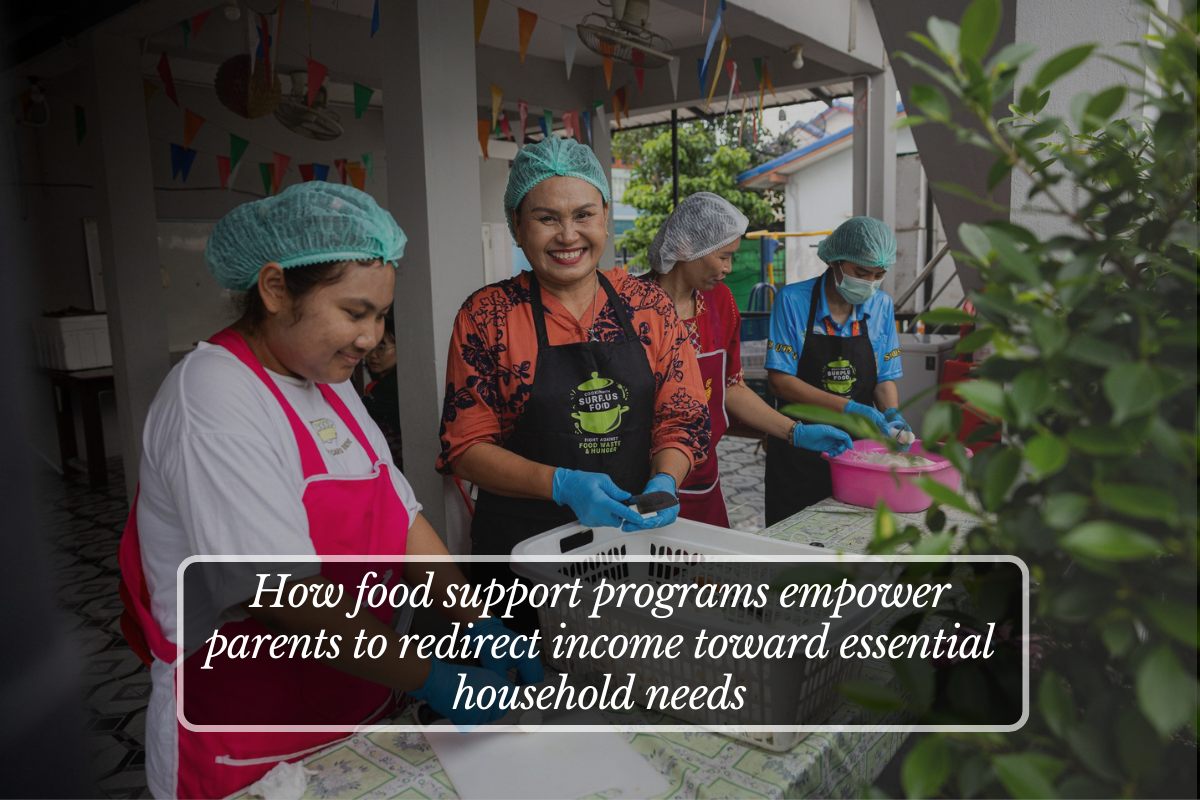
Food support programs such as SNAP, WIC, and free school meals do more than fill pantries in the United States; they effectively free up cash so parents can cover rent, utilities, transportation, and medical bills that keep households stable. By shifting part of the food budget onto public programs, families can redirect scarce income toward other essentials, reducing poverty and financial stress while supporting children’s health and development.
How SNAP Frees Up Income for Essentials
The Supplemental Nutrition Assistance Program (SNAP) provides monthly benefits on an EBT card that families use to buy groceries, allowing them to spend more of their limited income on housing, electricity, transportation, and health care.
In 2016, SNAP lifted 7.3 million people—including 3.3 million children—above the poverty line and made millions of others less poor, more than any program except the Earned Income Tax Credit and Child Tax Credit combined. Analyses show SNAP benefits explicitly “free up household income for other basic needs,” acting as a flexible income support for parents juggling multiple bills.
Because SNAP is designed to supplement a household’s food budget (assuming families contribute about 30% of net income to food), each additional dollar in SNAP benefits effectively replaces a dollar families would otherwise spend on groceries.
This shift lets parents catch up on rent, prevent utility shut‑offs, pay for car repairs needed to stay employed, or purchase medications and co‑pays that might otherwise be skipped. Evidence also links SNAP participation to improved diet quality and better health, which can reduce long‑term medical costs.
WIC: Supporting Young Children While Easing Parents’ Budgets
The Special Supplemental Nutrition Program for Women, Infants, and Children (WIC) provides targeted food packages, breastfeeding support, and nutrition education to low‑income pregnant and postpartum women, infants, and children under five who are at nutritional risk.
Participants receive monthly benefits for nutrient‑dense foods such as milk, whole grains, eggs, lean proteins, and fruits and vegetables, which directly cover a large share of young children’s and mothers’ dietary needs. Nationally, about two in five U.S. babies benefit from WIC, underscoring its reach into working‑class and low‑income families.
By covering staples like formula, cereal, and produce, WIC reduces out‑of‑pocket food expenses during the costliest early years, enabling parents to direct income to diapers, childcare, transportation to work, and stable housing.
Research shows WIC improves birth outcomes, lowers infant mortality, and reduces first‑year medical costs by an estimated $1.19 billion (in 1992 dollars), creating both direct and indirect financial relief for families. Families receiving housing subsidies, SNAP, and WIC together are 72% more likely to be housing‑secure than similar families without all three supports, highlighting how nutrition aid strengthens overall household stability.
School Meals and Household Budget Relief
Free and reduced‑price school breakfast and lunch ensure children receive at least one or two nutritious meals per school day, significantly easing pressure on family grocery budgets. Under the Community Eligibility Provision (CEP), schools in high‑poverty areas serve universal free meals, eliminating applications and stigma.
A National Bureau of Economic Research study found that CEP exposure led low‑income households to reduce monthly grocery spending by about $11 (around 5%), and up to $39 (19%) in areas with high take‑up, representing real savings families can divert to other needs.
Researchers also found improvements in dietary quality and a nearly 5 percentage‑point decline in the share of households classified as food insecure after schools adopted universal free meals. Parents reported less stress about stretching food money to the end of the month, as school meals reliably covered children’s daytime nutrition. These savings allow redirection of income toward rent, transportation, clothing, school supplies, or extracurricular fees that support children’s social and academic development.
Economic Ripple Effects for Families and Communities
SNAP benefits not only free up income but also stimulate local economies—each federal SNAP dollar generates about $1.70–$1.80 in economic activity as families spend benefits in neighborhood grocery stores and markets.
WIC redemptions likewise inject millions into local food retailers; for example, WIC food benefits in one Illinois county generated more than $100,000 in local economic impact in a single year. This dual effect supports both the families using the programs and the small businesses they patronize.
As food bills shrink, families can more consistently pay for internet, phone service, and transportation—services that are critical to maintaining employment, accessing education, and managing health. Over time, this financial breathing room can prevent evictions, reduce reliance on high‑interest credit, and support upward mobility.
Policy Implications: Food Aid as Income Support
Public health and anti‑poverty experts increasingly describe nutrition programs as both health interventions and de‑facto income supports for low‑income parents. Evidence that SNAP, WIC, and school meals reduce poverty, food insecurity, and health costs bolsters arguments for higher benefit levels, expanded eligibility, and simplified enrollment.
Strengthening these programs—through measures like permanent summer EBT, year‑round school meals, or WIC modernization—would amplify parents’ ability to redirect scarce dollars toward stable housing, transportation, and healthcare that give children a stronger foundation.
Frequently Asked Questions (FAQs)
1. How does SNAP help parents pay for other household bills?
SNAP covers a portion of grocery costs with monthly EBT benefits, so families can use more of their cash income for rent, utilities, transportation, and medical expenses instead of food.
2. What role does WIC play in reducing financial stress for families with young children?
WIC provides free or subsidized formula, staple foods, and nutrition support for pregnant women, infants, and young children, lowering out‑of‑pocket food costs and freeing income for diapers, childcare, and housing.
3. How do school meal programs affect family food budgets?
Free or reduced‑price school breakfasts and lunches, especially under the Community Eligibility Provision, reduce household grocery spending by 5–19% in some areas and lower reported food hardship, letting parents redirect money to other essentials.
4. Do these programs actually reduce poverty?
Yes. SNAP lifted about 4.6 million people out of poverty in 2015, and WIC lifted roughly 279,000 people above the poverty line in 2017, while also improving health outcomes that reduce long‑term costs.
5. How do food support programs benefit local economies?
Benefits spent at local stores increase economic activity; each SNAP dollar generates around $1.79 in local economic output, and WIC redemptions similarly support grocery stores and farmers, strengthening community economies.