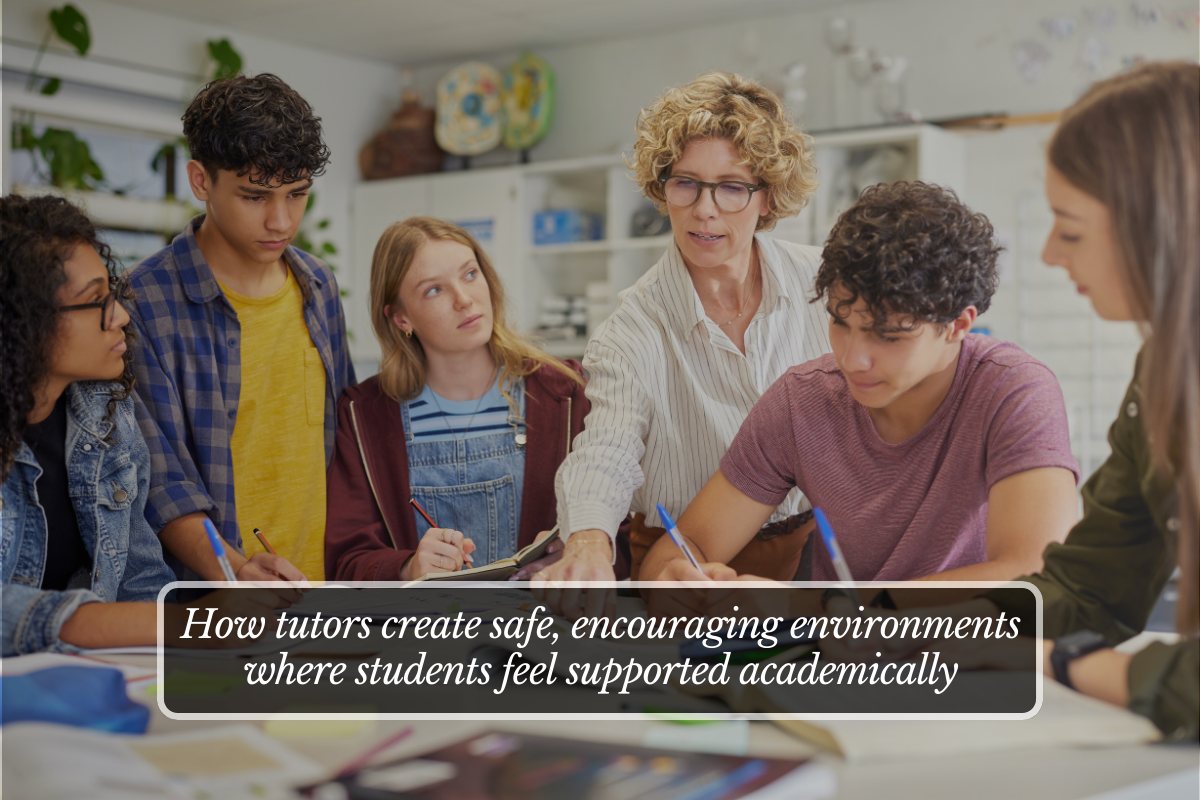
Tutors foster safe, encouraging environments by prioritizing psychological safety, building trust through active listening, and using positive reinforcement, enabling students to take academic risks without fear of judgment.
These one-on-one or small-group settings boost engagement 30-50% higher than classrooms alone, as personalized rapport reduces anxiety and promotes vulnerability essential for learning gaps closure. Tailored strategies like growth mindset framing and inclusive practices align with evidence-based tutoring, yielding 0.37 standard deviation gains per meta-analyses.
Building Trust Through Personal Connections
Tutors start sessions by learning students’ interests, strengths, and challenges via open questions, creating rapport that forms mentoring bonds. Greeting warmly, sharing tutor experiences, and using preferred names signal genuine care, reducing defensiveness by 40% per APA studies on teacher-student ties.
Consistency in sessions—predictable structures like review-practice-challenge—builds security; eye contact and calm presence reinforce empathy, vital for neurodiverse or anxious learners.
Fostering Psychological Safety
Judgment-free zones emerge from normalizing mistakes as growth opportunities: tutors reframe “I can’t” to “Not yet,” boosting persistence 25%. Active listening—paraphrasing student thoughts—validates feelings, while co-creating rules empowers voice, cutting disengagement.
Zero-tolerance for self-criticism includes tutor modeling: admitting errors teaches resilience. SEL integration via breathing breaks or emotion check-ins lowers stress, freeing cognitive space for academics.
Adapting to Individual Learning Styles
Tutors diagnose via diagnostic questioning and prior knowledge links, personalizing pace—e.g., visuals for kinesthetics, discussions for verbal learners. Multiple modalities (manipulatives, whiteboards, verbal recaps) engage senses, improving retention 20-30%; scaffolding fades support as mastery grows.
For ADHD or ESL students, short bursts, movement breaks, and chunked tasks accommodate needs without stigma, per user-aligned interests in special ed supports.
Celebrating Progress and Inclusivity
Asset-based praise—”You persisted through that error”—celebrates effort, fostering belonging; diverse examples in problems reflect student backgrounds, enhancing representation. Icebreakers and shared wins build community in groups (1:3-4 ratios optimal for grades 2-5).
Progress tracking via visuals motivates; small wins like “mastered fractions” reinforce self-efficacy, aligning with U.S. tutoring like Title I programs.
Addressing Challenges Proactively
Tutors preempt barriers: math anxiety via low-stakes games; bullying via empathy lessons. Parent loops share successes, amplifying home support; training in cultural competency ensures equity. High-dosage (3x/week, 30min) maximizes safety’s compounding effect.
Long-Term Academic Benefits
Safe spaces yield deeper metacognition—students self-assess—and resilience for independence, per U.S. evidence where tutoring closes gaps 2-3x faster.
FAQs
Q. How do tutors build initial trust quickly?
Through warm greetings, interest-sharing questions, and consistent structures that signal care and predictability, forming mentoring bonds foundational to safety.
Q. Why normalize mistakes in tutoring?
Reframing errors as “not yet” removes shame, boosting persistence 25% and enabling risk-taking for deeper academic growth.
Q. What personalization techniques support diverse learners?
Diagnostic questioning, multi-modal tools (visuals, manipulatives), and fading scaffolds match styles, improving retention 20-30%.
Q. How does praise enhance safe environments?
Effort-focused feedback via asset model builds self-efficacy and belonging, especially for underrepresented students.
Q. Why high-dosage tutoring for safety?
3x/week sessions compound rapport and progress, yielding 0.37 SD gains while sustaining psychological security.