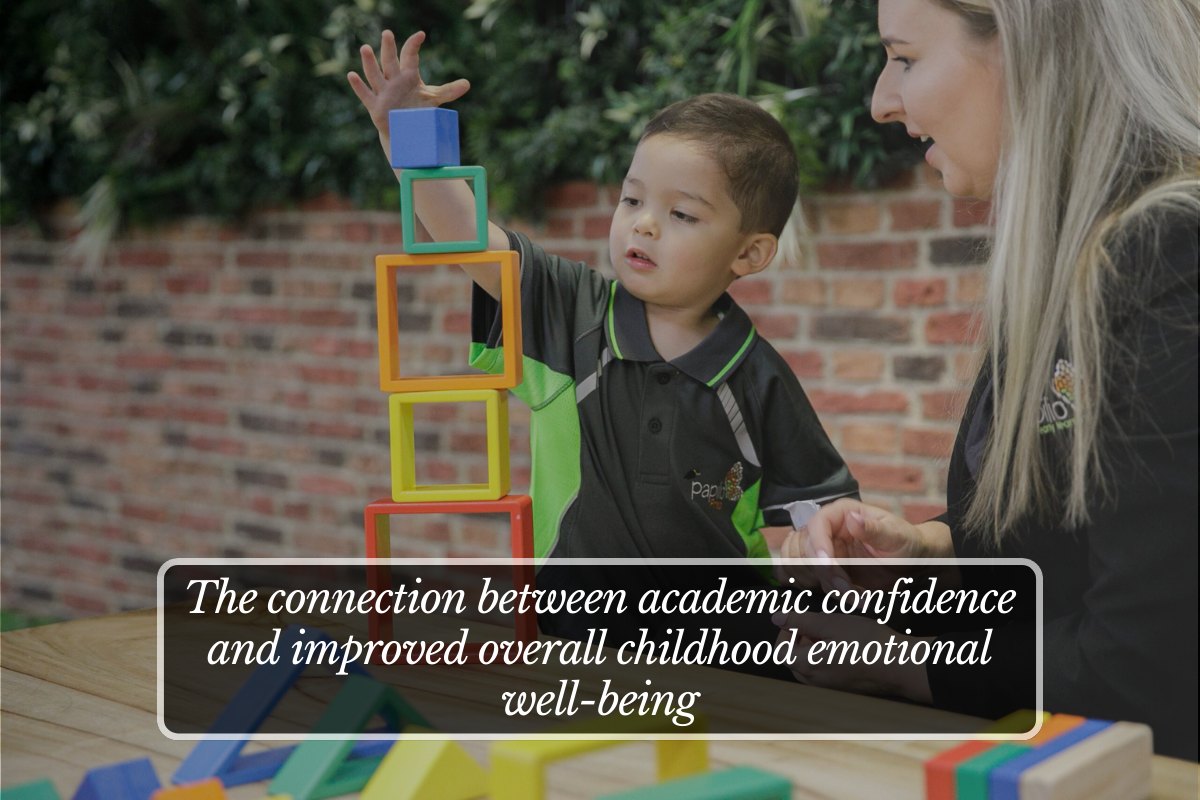
Academic confidence—children’s belief in their school abilities—strongly predicts emotional well-being by fostering resilience, self-esteem, and positive peer relations, with studies showing bidirectional links where confidence boosts life satisfaction while emotional health sustains academic self-concept.
Longitudinal data reveal kindergarteners with strong emotion regulation and academic faith achieve 20-30% higher literacy/math scores and report greater happiness, mediating via teacher bonds and reduced behavior issues.
Bidirectional Pathways in Development
Emotion regulation skills enable focus and persistence, building academic confidence that loops back to emotional stability; kindergartners excelling via self-control show unique gains in classroom productivity beyond IQ. Peer acceptance/number of friends elevate perceived competence, mediating 25-40% of links to life satisfaction and achievement—confident kids form bonds, amplifying well-being. Hedonic (happiness) and eudaimonic (purpose) well-being differentially predict: emotional positivity aids younger kids’ confidence, school engagement sustains older ones.
Neurological and Motivational Mechanisms
Confidence activates prefrontal reward circuits, mirroring SDT’s competence need; low self-concept correlates with anxiety via rumination loops. SEL programs enhance both—meta-analyses of 424 studies (500K+ kids) confirm academic gains alongside social-emotional flourishing, countering mental health crises. Parent-school communication moderates: supportive ties buffer stress, linking family dynamics to emotional/academic synergy.
Longitudinal Evidence from Studies
325 kindergartners: emotion regulation uniquely predicts success, independent of teacher relations/problems. Peer dynamics: acceptance boosts competence mediating satisfaction/achievement; rejection predicts drops. England data: wellbeing declines track self-competence erosion, with positive school feelings forecasting KS4 gains. OECD reports: emotional skills like coping elevate confidence, reducing dropout risks.
Protective Role Against Adversity
High confidence buffers bullying/low SES effects on well-being; self-belief fosters agency, cutting depressive symptoms 30%. Interventions targeting self-concept yield cascading benefits: motivated learners engage more, enhancing relatedness/autonomy per SDT.
Fostering Confidence for Well-Being
School strategies—growth mindset praise, SEL curricula—build loops; confident kids report 20% higher satisfaction, perpetuating cycles.
FAQ
1. How does confidence affect emotions?
Boosts self-esteem/resilience; mediates peer-life satisfaction links.
2. Early signs in kindergarten?
Emotion regulation predicts productivity beyond IQ/teacher ties.
3. Peer role?
Acceptance elevates competence, driving achievement/well-being.
4. SEL impact?
424 studies: academic/social gains in 500K+ kids.
5. Buffer against stress?
Cuts anxiety 30%; growth praise sustains cycles.