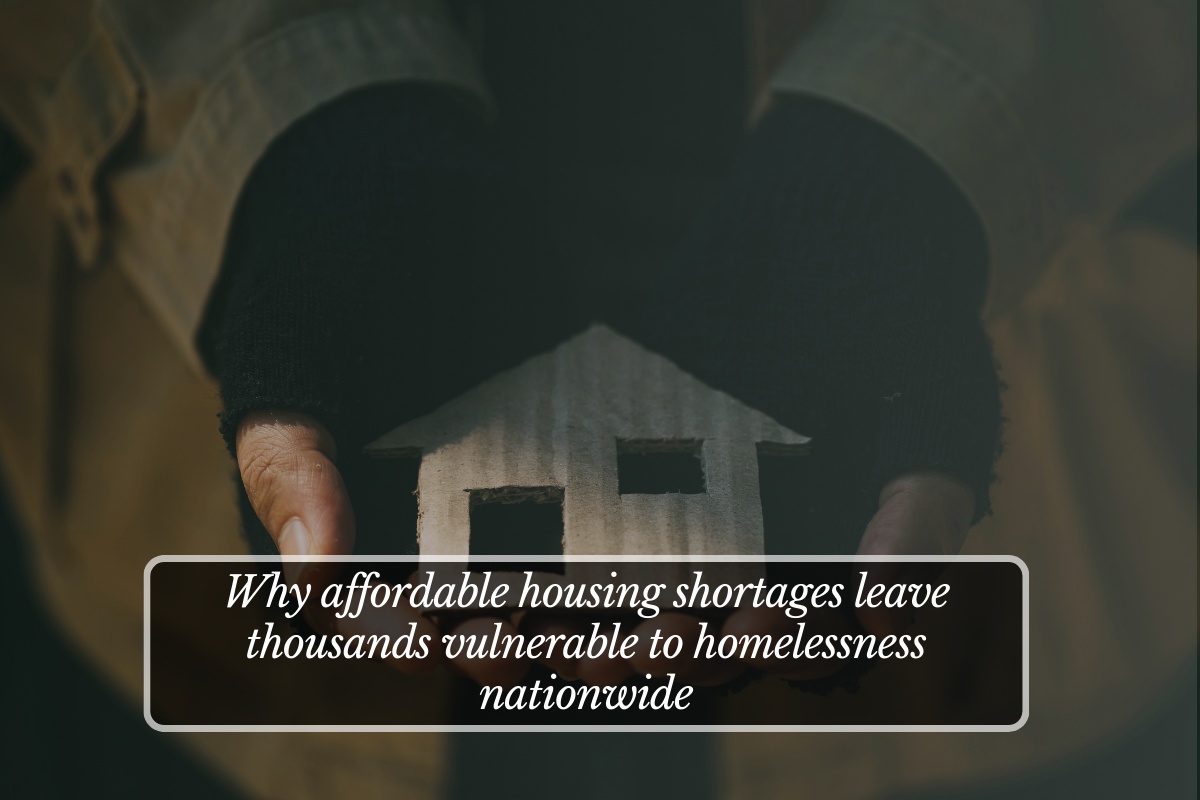
The USA faces a dire affordable housing shortage of 7.1 million units for extremely low-income renters, with only 35 available homes per 100 such households, per NLIHC’s 2025 Gap report. This crisis drives record homelessness—771,480 people in 2024, up 18%—as rents outpace wages, evictions surge post-COVID, and safety nets falter. Vulnerable groups like seniors, disabled individuals, and low-wage workers bear the brunt nationwide.
Scale of the Housing Shortage
Nationwide, 10.9 million extremely low-income renters compete for 3.8 million affordable units, creating an 8.3 million gap when including moderate low-income households. States like Nevada, Oregon, California, Arizona, and Texas suffer worst, with under 30 units per 100 renters. Overall deficit hits 4.7 million homes, worsened by two decades of underbuilding since the Great Recession.
Direct Link to Rising Homelessness
HUD’s 2024 PIT count shows homelessness at all-time highs, with New York and California housing 44% despite construction surges. A $100/month rent hike correlates to 9% more homelessness; minimum wage ($7.25/hour) covers just 30% of modest two-bedroom rents needing $25.82/hour. End of eviction moratoriums and COVID aid pushed 653,104 to 771,480 unhoused.
Root Causes: Supply Constraints and Policy Failures
Private markets ignore low-income needs; NIMBYism, zoning restrictions, and construction costs block development. Insufficient federal subsidies leave voucher waitlists years long; discrimination excludes marginalized groups. High-wage demand inflates costs in metros, doubling-up 8.1 million families.
Vulnerable Populations at Greatest Risk
Extremely low-income renters—seniors, disabled, families—spend >50% income on rent, facing severe cost-burden. Black and Pacific Islander Americans overrepresented; Gen-Z youth hit hard in places like San Jose. Immigration surges and job losses compound risks without affordable options.
Potential Solutions and Policy Reforms
Boost Housing Trust Fund, vouchers, public housing; ease zoning for 3-4 million new units. States with new supply see rent drops in low-income areas; federal incentives needed. Ending source-of-income discrimination aids access.
This shortage isn’t inevitable—targeted investments can house the vulnerable before streets claim more lives.
FAQs
1. How many affordable homes are short nationwide?
7.1 million for extremely low-income renters; 8.3 million total low-income gap.
2. What drove 2024’s homelessness record?
18% rise to 771,480 from rent hikes, ended COVID aid, shortages.
3. Which states face worst shortages?
Nevada, Oregon, CA, AZ, TX—under 30 units/100 renters.
4. How much wage needed for average rent?
$25.82/hour for two-bedroom; minimum wage covers 30%.
5. What blocks new affordable housing?
NIMBYism, zoning, costs, underfunding subsidies.